My new books, "My Dearest Lilla: Civil War Letters Home from General Jacob Cox," published by the University of Tennessee Press, and "Searching for Irvini McDowell: The Civil War's Forgotten General," published by Savas-Beatie, along with the nineteen books in my series, "Civil War Personalities: 50 At a Time," are available at https://www.amazon.com/-/e/B00HV4SSWK
Civil War Talks on the Life of Jacob Cox, the Battle of Antietam, the Battle of Franklin, and the War in West Virginia
The stereotypical view of the First Battle of Bull Run, whose anniversary we note on July 21, is that is was a rousing Confederate victory and that the Union troops all ran away like proverbial scared rabbits.
In fact, at one point in that mid-afternoon in 1861, Union commander Irvin McDowell had victory in his hands, but he let it slip away. He had the Confederates on the run, but he hesitated to follow up his early advances, and his inexperienced men panicked.
Last August my colleague Frank Simione, Jr., and I published on amazon.com the first-ever biography of McDowell. Now, I am pleased to say, renowned Civil War published Savas-Beatie has contracted with us to re-publish the book. We hope it will be available in the fall. In the meantime, see the book at: https://www.amazon.com/-/e/B00HV4SSWK
On July 13, a statue of Floridian Mary McLeod Bethune, a renowned educator and Civil Rights activist, will be emplaced in Statuary Hall in the U.S. Congress, replacing the statue of former Confederate General Edmund Kirby Smith. The latter statue, emplaced in 1922 by the state of Florida, is one of several representing Confederate leaders who were chosen by their states for this honor.
Among those Confederate statues remaining are Jefferson Davis (Mississippi), Alexander Stephens (Georgia), and Wade Hampton (South Carolina).
In late 2020 the statue of Robert E. Lee (Virginia) was removed, and it will eventually be replaced by one of Barbara Johns, a young woman who led protests against school segregation.
In response to this change, I have updated my book, “The Civil War in Statuary Hall,” the only one which has been written on this topic. It is available at my author’s page at amazon.com, https://www.amazon.com/-/e/B00HV4SSWK
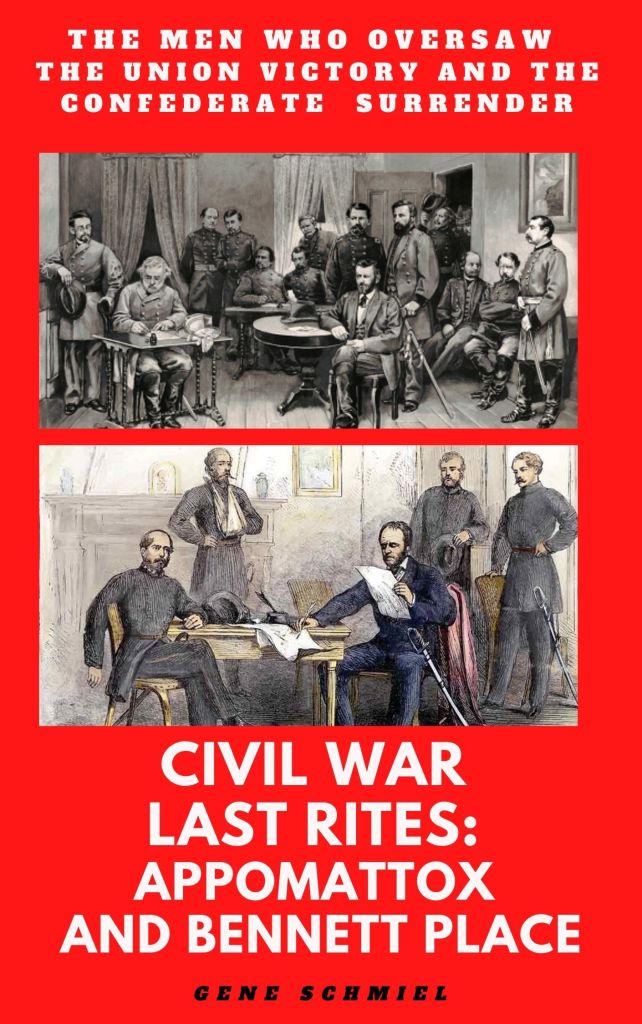
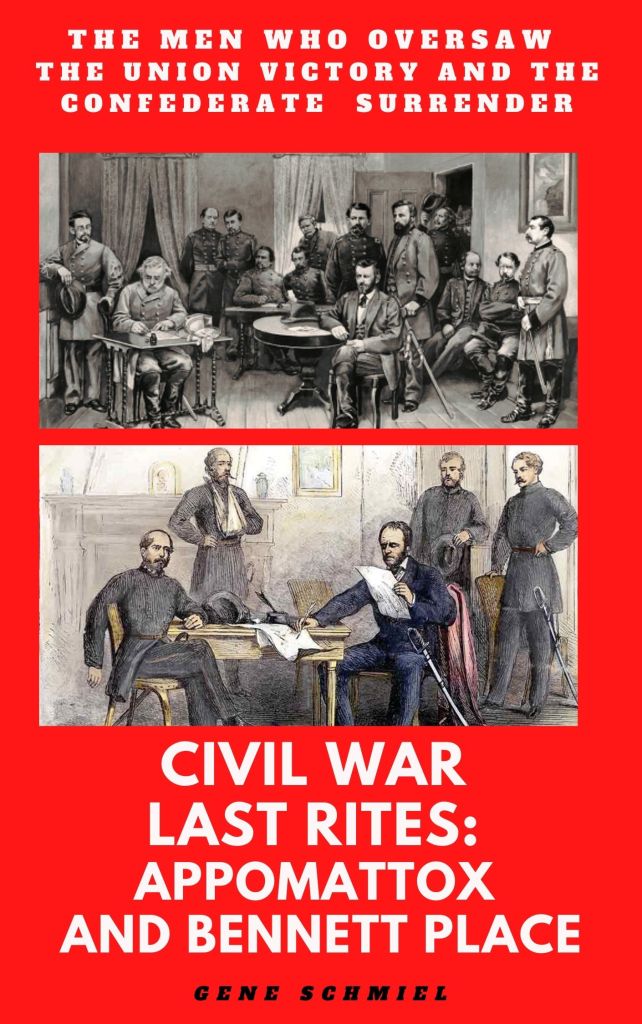
The latest book in my series about Civil War personalities, “Last Rites at Appomattox and Bennett Place,” has been published. It looks at 50 people who participated at the two major surrender events and how they arranged the end of the war — and the beginning of peace. The books is a companion piece to my book, “Civil War Baptism of Fire: First Battle of Bull Run,” about the people who were there at the beginning.
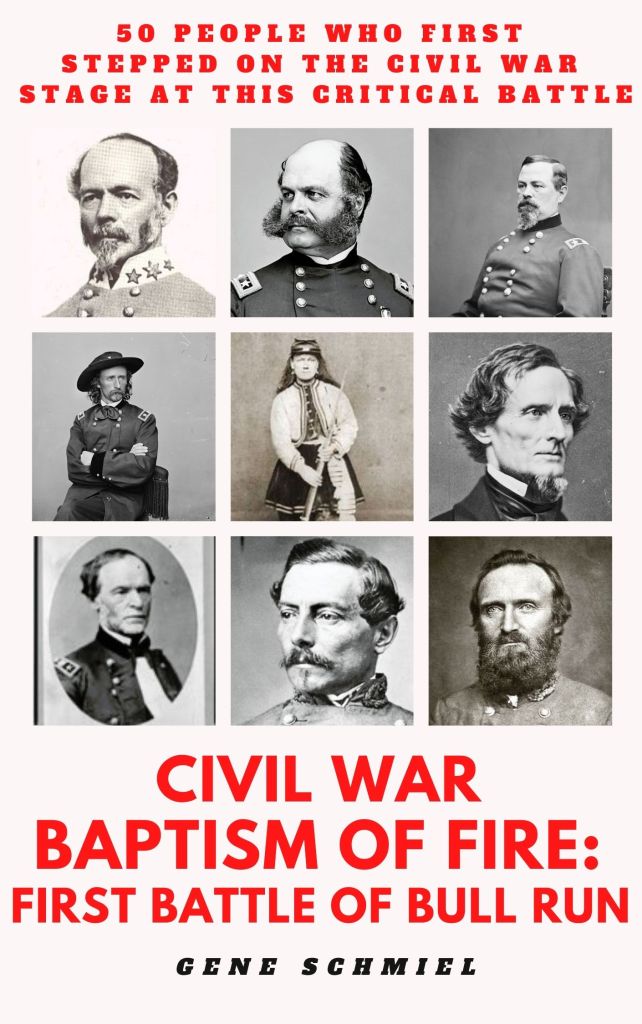
On the cover of my latest book, Civil War Baptism of Fire: First Battle of Bull Run, which notes that many major Civil War figures first stepped on the Civil War stage at that battle, I placed a relatively-minor figure, Kady Brownell, in the center. This is because she was unique.
That is, while an estimated 400 women disguised as men fought in the Civil War, at the First Battle of Bull Run, everyone in her regiment, the 1st Rhode Island, knew Kady was a woman. Further, she actually engaged in the fighting. As one author put it, “wearing a red sash with big tassels and letting her long hair flow freely over her shoulders and back, the color-bearer of the 1st Rhode Island advanced boldly with her men.”(Webb Garrison, Amazing Women of the Civil War).
Later, Kady would be the only woman officially discharged from the army, and she would be granted a military pension.
You can read more about Kady and the other 49 personalities in the book, available at:
Charles Mason, class of 1829, still holds the record for the most points of any graduate of West Point. The point system, based on a variety of factors, including academics and discipline, determined that Robert E. Lee would be second ranked in that class behind Mason.
After graduation, Lee stayed in the army, and the rest of his life is well known. Mason, a native of New York state, resigned from the army in 1831 and moved to Iowa. There he became a lawyer and, from 1838 to 1847, was Chief Justice of Iowa’s territorial and state courts. In 1839 he ruled that a slave who had been brought to the Iowa territory was free because slavery was illegal there.
Mason, a Democrat, would take another politically-enlightened step in 1853 after President Franklin Pierce appointed him as U.S. Commissioner of Patents. In a first for the federal government, he decided to hire female clerks at the same salaries and under the same conditions as men.
One of those clerks hired in 1854 was Clara Barton. She had been a teacher in New Jersey. When she interviewed for the job, Mason was so impressed that he hired her the same day. She and Mason would stay at the Patent Office until 1857, when she was fired by the Buchanan administration. Mason returned to Iowa, where he resumed his legal career and ran unsuccessfully for Governor in 1861 and 1867. Barton returned to the Patent Office as a clerk in late 1860, after Lincoln’s election.
During the Civil War, Mason, a Unionist Democrat, perhaps looked back with a bit of remorse about leaving behind a military career. He once observed in his diary, “General Lee is winning great renown as a great captain. Some of the English writers place him next to Napoleon and Wellington. I once excelled him and might have been his equal yet perhaps if I had remained in the army as he did.”
As for Barton, the serendipity of Lee’s academic superior having an enlightened approach to civil service employment would lead to her becoming perhaps the most famous woman of the Civil War era. On April 19, 1861, having heard that wounded soldiers from the Baltimore riots were arriving at a Washington, DC train station, she left her government office to help care for the men. That action was the springboard for her career, which ultimately led to her leadership of the American Red Cross.
The latest book in my series, “Civil War Personalities: 50 At a Time,” entitled CIVIL WAR BAPTISM OF FIRST: FIRST BATTLE OF BULL RUN, is now available in both paperback and ebook versions via my author’s page at amazon.com: https://www.amazon.com/-/e/B00HV4SSWK
The book notes that this battle saw dozens of people who would make their mark on history in the next four years step on the stage of the Civil War for the first time: Sherman, Custer, Burnside, Johnston, Jackson, Beauregard, Logan, McDowell, Longstreet, Fitzhugh Lee, A.P. Hill, Hampton, Ewell, Early, Hunt, Howard, Jefferson Davis, and many others .
The book consists of both an introduction to the battle and 50 short essays about each person, complete with photos, maps, and lists of books for further reading about each. Here is an image of the front cover.
Recently I published two books which are, in a sense, “bookends of the Civil War’s Hallowed Ground.” That region, between Gettysburg to the north and Appomattox Court House/Bennett Place to the south, saw the major Civil War battles of the eastern front as well as the two most important surrender events.
The two books, the latest volumes in my series, “Civil War Personalities, 50 At a Time,” are titled Civil War Baptism of Fire: First Battle of Bull Run and Civil War Last Rites: Appomattox and Bennett Place.” Bull Run is where it all began; and Appomattox and Bennett Place are where it all ended. The books are now available at: https://www.amazon.com/-/e/B00HV4SSWK
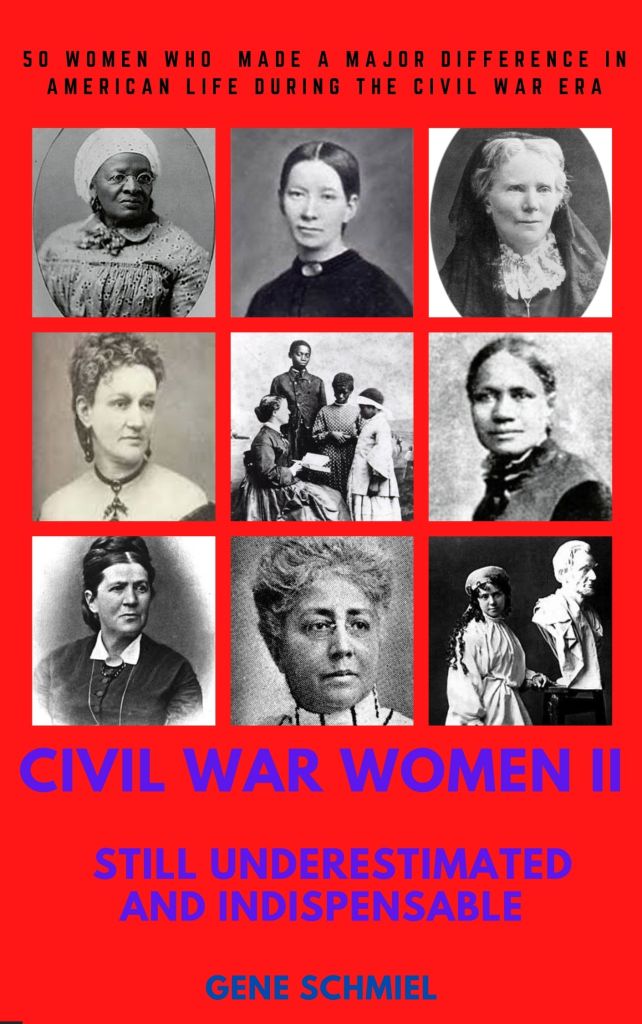
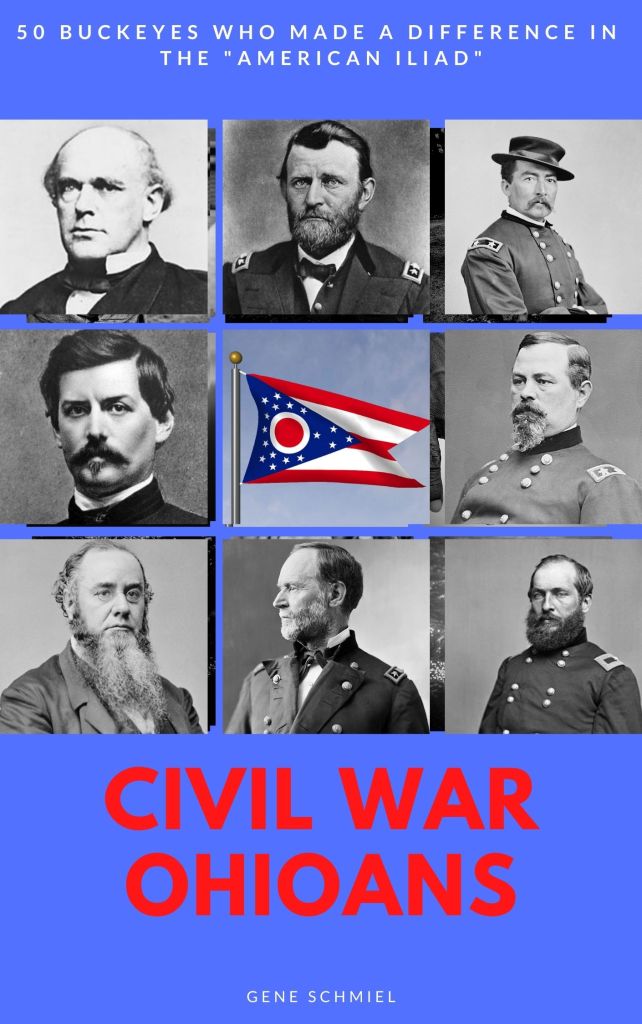
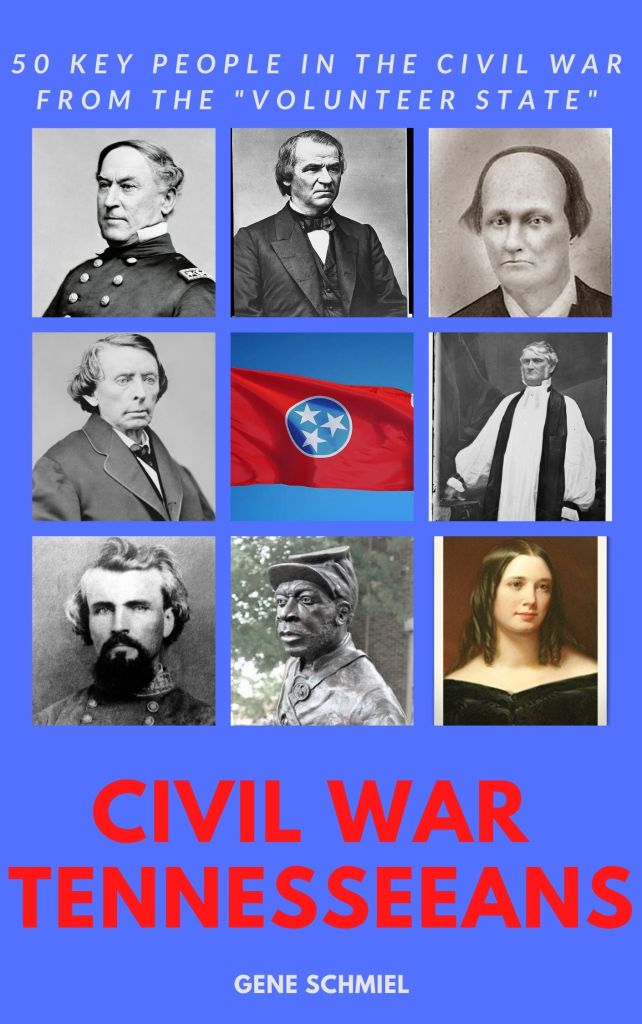
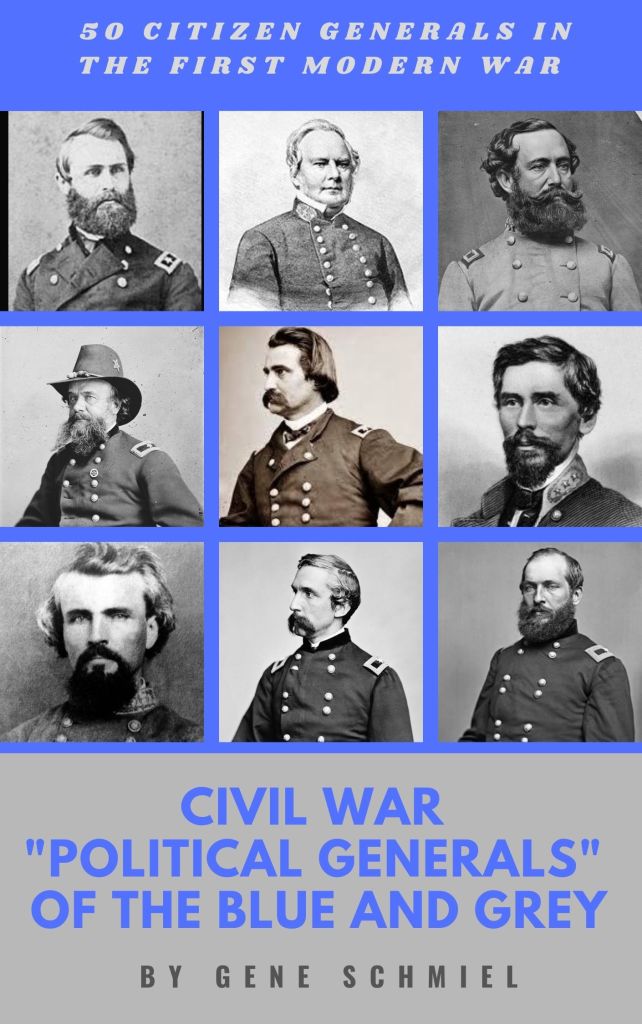
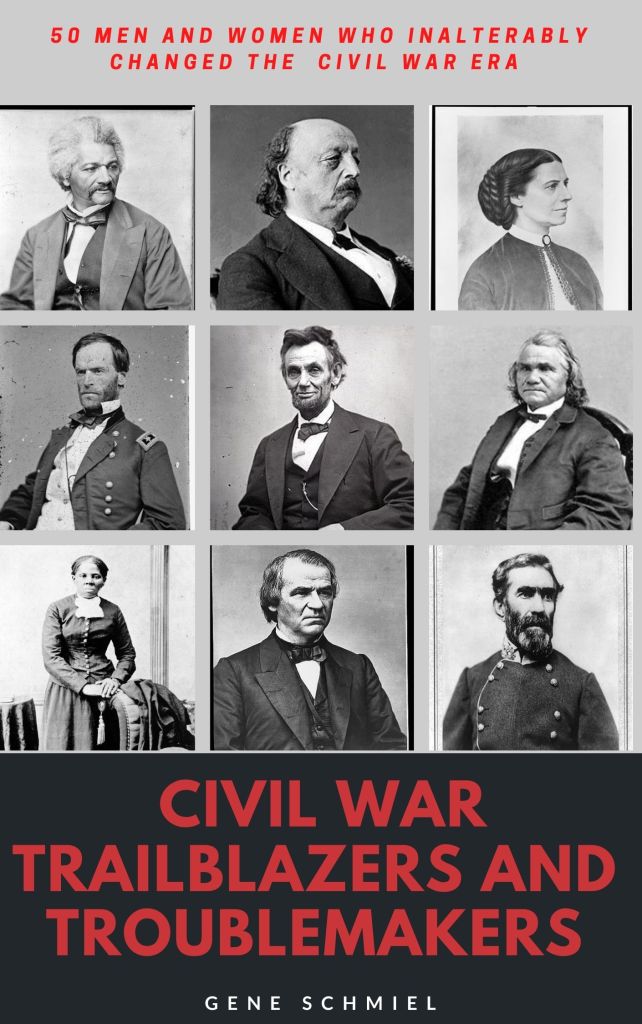
I am pleased to see that sales of my books are really picking up for the season. For those who have delayed your purchase, here is a reminder, complete with pictures of the books in my series, “Civil War Personalities, 50 At a Time.” (Those of you from Ohio, Virginia, and Tennessee will especially be interested in the books about the men and women from those states). Merry Christmas and Happy Holidays to all!
Last Thursday Frank Simione, Dutch Schneider, and I gave our presentation to the Bull Run Civil War Round Table about our book,. “Searching for Irvin McDowell.”
As you can see from this picture, we were fortunate that General McDowell himself, in the person of Dutch, was able to make a guest appearance! The uniform was made for him during the Sesquicentennial by the Manassas Museum, which generously allowed us/him to have it for this presentation.
If you would like to buy the book, it is available at:
My co-author Frank Simione and I will be presenting a talk about our book, “Searching for Irvin McDowell, Forgotten Civil War General” this evening at the Bull Run Civil War Round Table. You can view the talk on Facebook at that Round Table’s web-site: https://www.facebook.com/bullruncwrt








 GENE SCHMIEL, CIVIL WAR HISTORIAN, AUTHOR, AND LECTURER